Soften the stool
Eat 25 to 30 g of fibre a day from fruit, vegetables, dal, whole grains and salad. Isabgol (psyllium husk) helps; ask your doctor about the dose.
Care guide
Piles, or haemorrhoids, are swollen cushions of blood vessels in and around the anus. They are very common. They usually cause painless bright red bleeding, itching or a soft lump, and most settle with softer stools, warm sitz baths and simple medicines. Larger or stubborn piles are treated in a clinic or with surgery.
Also called bawasir (बवासीर) in Hindi and Urdu, and mulvyadh (मूळव्याध) in Marathi. Bleeding piles are often called khooni bawasir, and non-bleeding piles badi (baadi) bawasir.
01
Everyone has soft cushions of blood vessels inside the anal canal. They help keep the anus closed and control wind and stool. When these cushions swell, stretch and slip down, usually from repeated straining, they are called piles or haemorrhoids.
Many people have both. Piles are not dangerous in themselves, but their symptoms overlap with other conditions, so a doctor should confirm the cause of any bleeding.
02
Sharp, cutting pain while passing stool, with a streak of blood, is the classic sign of a fissure rather than piles. A painful swelling with fever or discharge can be an abscess, which may lead to a fistula. All three can occur together.
03
Doctors grade internal piles by how far they come out. The grade guides treatment, but symptoms matter as much as the grade.
| Grade | What happens | Usual first treatment |
|---|---|---|
| Grade 1 | Bleed but stay inside | Fibre, fluids, sitz baths, short course of medicines |
| Grade 2 | Come out on straining, go back by themselves | As grade 1; rubber band ligation or sclerotherapy if they persist |
| Grade 3 | Come out and must be pushed back by hand | Band ligation, or surgery such as stapler, laser or haemorrhoidectomy |
| Grade 4 | Stay outside and cannot be pushed back | Usually surgery |
A thrombosed external pile is a sudden, painful, bluish lump. Warm sitz baths, painkillers and stool softeners help it settle over one to two weeks; a surgeon may remove the clot if seen early.
04
Anything that raises pressure in the anal veins for long periods can cause piles. Common causes are:
Spicy food does not cause piles, but it can make burning and itching worse for some people. Notice what affects you.
05
These steps relieve symptoms and stop piles from getting worse. Doctors advise them at every grade, before and after any procedure.
Eat 25 to 30 g of fibre a day from fruit, vegetables, dal, whole grains and salad. Isabgol (psyllium husk) helps; ask your doctor about the dose.
About 2.5 to 3 litres a day, unless your doctor has limited your fluids.
Go when you feel the urge, don’t push hard, and leave the toilet within about 5 minutes. A small footstool under your feet helps.
10 to 20 minutes, 2 to 3 times a day and after passing stool.
Wash with plain water and pat dry. Avoid rubbing, harsh soaps and scented wipes.
A daily walk helps the bowel move and reduces pressure on the veins.
06
A sitz bath is warm-water fomentation of the anal and perianal region. It is one of the most common things surgeons advise for piles, in India often called garam pani ki sekai.
To be clear: a sitz bath does not shrink or cure piles. It makes you more comfortable and keeps the area clean while diet, medicines or treatment do their work.
Use comfortably warm water, never hot, and test it on your wrist. Sit for 10 to 20 minutes. Read the full sitz bath guide for step-by-step instructions.
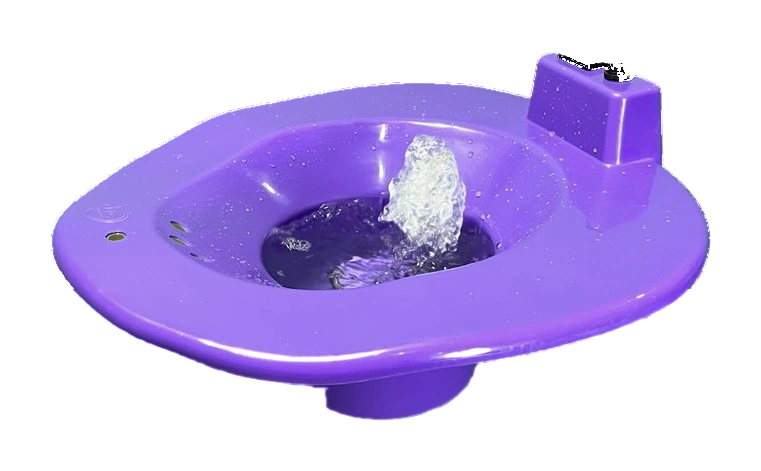
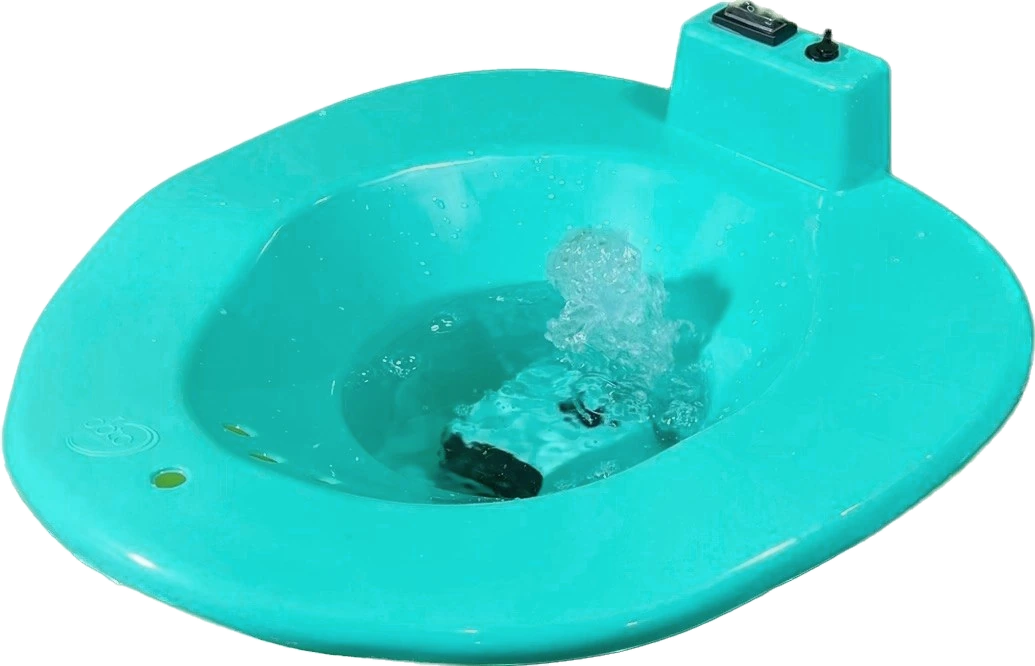
A basin that sits on your Western toilet saves you from squatting on the floor, which is hard when you are sore. Our fountain models also keep the warm water gently moving, so you can relax hands-free.
07
Your doctor will examine you and suggest treatment based on the grade, your symptoms and your health. The main options are:
After any procedure, surgeons usually advise warm sitz baths and soft stools. See care after piles, fissure or fistula surgery.
08
Piles are common in the last months of pregnancy and after a normal delivery, because of pressure from the baby, hormones, constipation and pushing in labour. They often improve within weeks of the birth.
Fibre, fluids, gentle walking and warm sitz baths are safe and usually enough. Ask your doctor before using any cream or medicine while pregnant or breastfeeding. See sitz bath after delivery.
09
See a doctor the first time you notice bleeding. Bleeding from the bottom is usually piles, but bowel cancer and other conditions can look the same, so never assume.
See a doctor urgently if you have heavy bleeding, feel faint or dizzy, pass dark or black stool, have severe pain or fever, or have a lump that will not go back and is very painful.
A general surgeon or proctologist can usually diagnose piles with a short examination in the clinic.
Small piles often settle in a few days to weeks with softer stools, less straining and warm sitz baths. They can come back if constipation returns. Larger piles that stay out usually need treatment.
Most grade 1 and 2 piles, and many grade 3 piles, are controlled without an operation, through diet, medicines and clinic procedures such as band ligation. Surgery is for large piles or when other treatments have not worked. Your surgeon will advise.
10 to 20 minutes, 2 to 3 times a day and after passing stool, or as your doctor advises.
Comfortably warm, never hot. Hot water can scald and can increase swelling. Test it on the inside of your wrist first.
Usually it is small and stops by itself, but any rectal bleeding should be checked by a doctor once, because other conditions, including bowel cancer, can cause it. Heavy bleeding or dizziness needs urgent care.
Piles are swollen blood vessels and are usually painless. A fissure is a small tear in the anal skin that causes sharp pain while passing stool. Both can bleed, and a warm sitz bath helps both.
Usually yes, and surgeons often advise it from the day after surgery. Follow your own surgeon’s instructions on when to start and how often.
It gives the same warm-water soak without squatting at floor level, which is hard when you are in pain, after surgery or with weak knees. A fountain model also keeps the water moving.
About the reviewer
Dr Govind Kodwani, MBBS, MS (General Surgery), FIAGES, FMAS, FCCS, Faculty at ISCP
Dr Govind Kodwani is a general surgeon and the proprietor of Kodwani Medisales, which makes Doctor Base Care products.
General information, not medical advice. Please see a doctor for diagnosis and treatment. Sources: NHS: Piles, NIDDK: Hemorrhoids, ASCRS: Hemorrhoids
A gentle, continuous warm-water splash on any standard Western toilet. Electric and rechargeable battery models.